How Communities Around Volcanoes National Park Are Reimagining Conservation Through a Community-Led Tourism Model
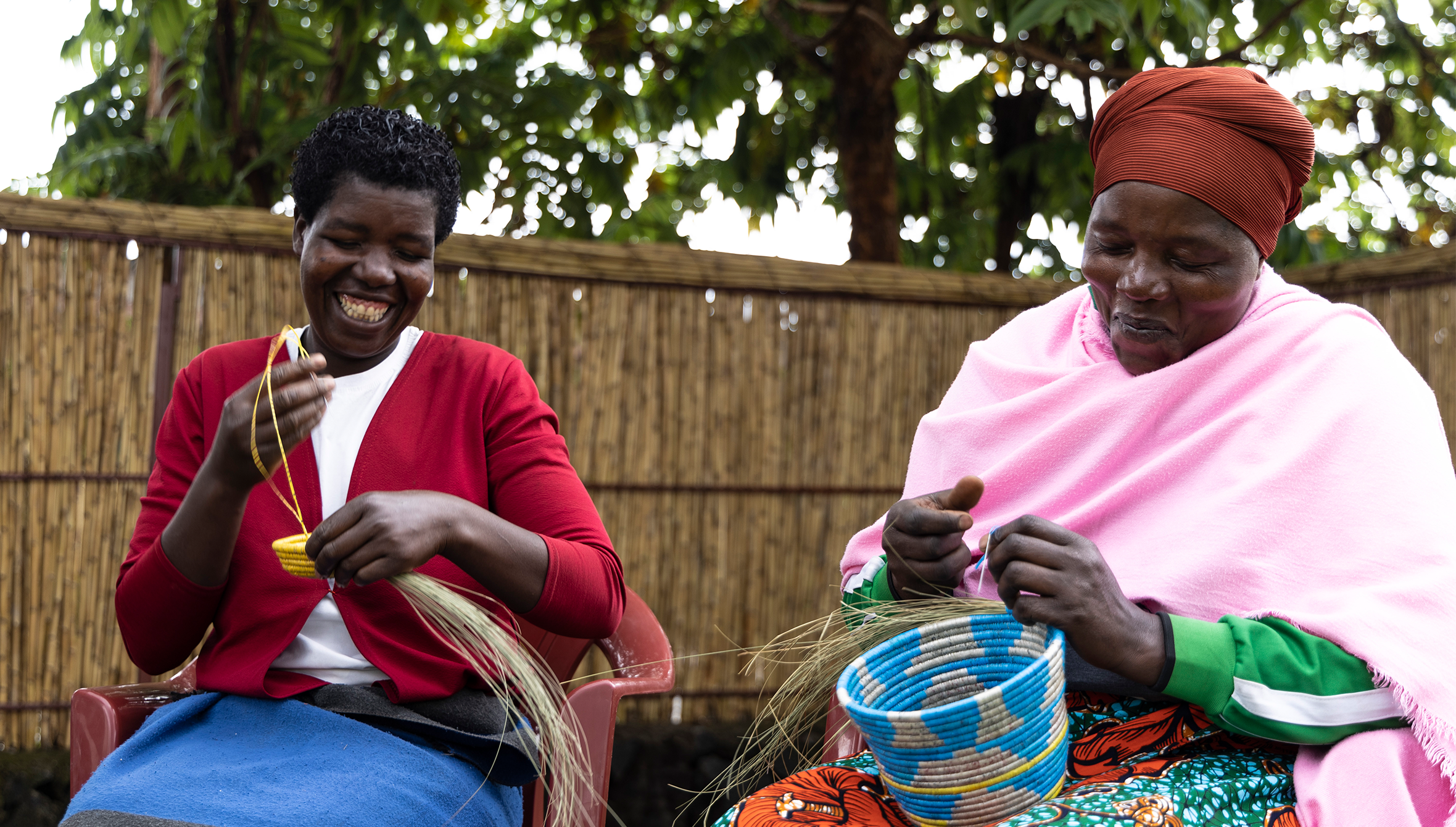
Mukamakuza Esther (right) skillfully weaving a basket at the Community-Based Tourism Center in Kinigi, Musanze District, with her colleague.
For people living near Volcanoes National Park (VNP), conservation often felt like an outside decision. Many families depended on local resources for daily needs—firewood for cooking, land for farming, and anything else to get through tough times.
Mukamakuza Esther remembers that time plainly. Sitting at the Community-Based Tourism Center (CBTC) in Kinigi, in Rwanda’s Musanze District, she speaks words that sum up her experiences.
“In the past, we did not understand the value of what lies around us,” Esther says.
Her words highlight a difficult truth. People don’t always harm nature out of indifference. Sometimes, survival feels more urgent than the distant benefits of conservation.
At the Park’s Doorstep, a Different Kind of Conservation Is Taking Root
For decades, communities adjacent to Volcanoes National Park depended heavily on natural resources. Firewood collection, subsistence farming, and occasional poaching were seen by some not as environmental threats, but as necessary actions for survival. In response, this transformative work, supported by the African Wildlife Foundation in close collaboration with the Rwanda Development Board and implemented by Red Rocks Initiative for Sustainable Development, has helped create sustainable alternatives that strengthen livelihoods while advancing conservation goals.
Esther describes reality without defensiveness. “In the past, people acted freely, including some who went to the park to cut wood,” she says.
Today, change in Kinigi is happening through participation, not just rules. The Community-Based Tourism Center near the park entrance is already helping people learn new skills, celebrate culture, start businesses, and get involved. It’s a real, working place where communities help shape conservation and benefit from it.
Learning That Turns Neighbors Into Stewards
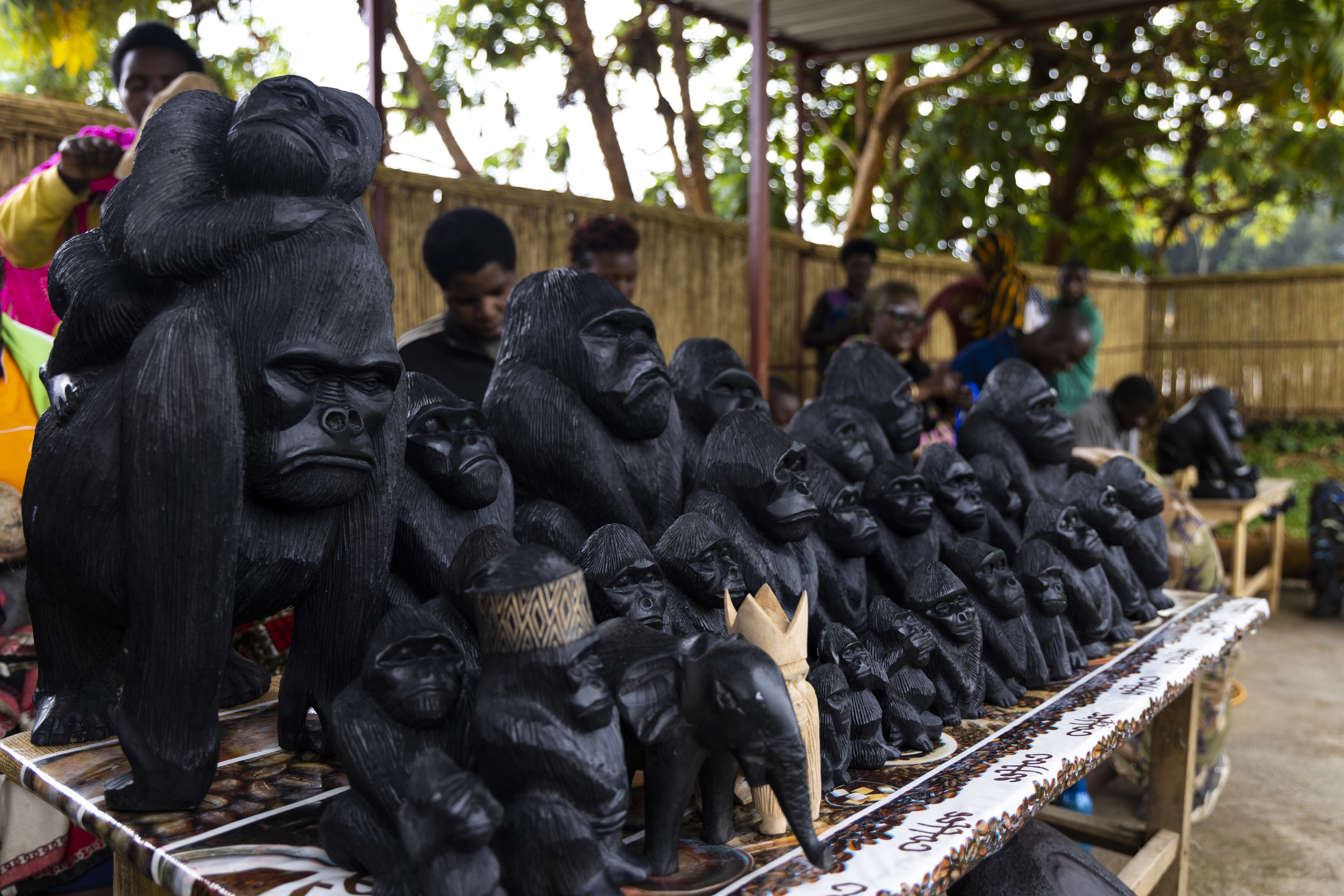
Crafts made at the Community-Based Tourism Center in Kinigi that serve as meaningful souvenirs for visitors to the landscape.
Esther says two things have changed: mindset and action.
“We have now changed our mindset in the interest of environmental conservation,” she says. “We have adjusted our behavior so that when an animal enters the community, we work to return it safely to its natural habitat. We are all part of this effort.”
This change is supported by conservation training and community discussions at the CBTC. Former poachers now work together to protect biodiversity. Artisans are starting craft businesses linked to tourism. Young people are learning about jobs in the growing service industry.
Now, she sees how everything is connected. “We now understand that preserving biodiversity is essential for our development.”
Economic changes have also made a personal difference. “Previously, we relied on others to pay our bills, but now, through activities like weaving, we can take care of ourselves,” she says.
There are still challenges. It’s hard to find markets for handmade products, but she remains hopeful that solutions will come.
When Enterprise Becomes a Conservation Asset
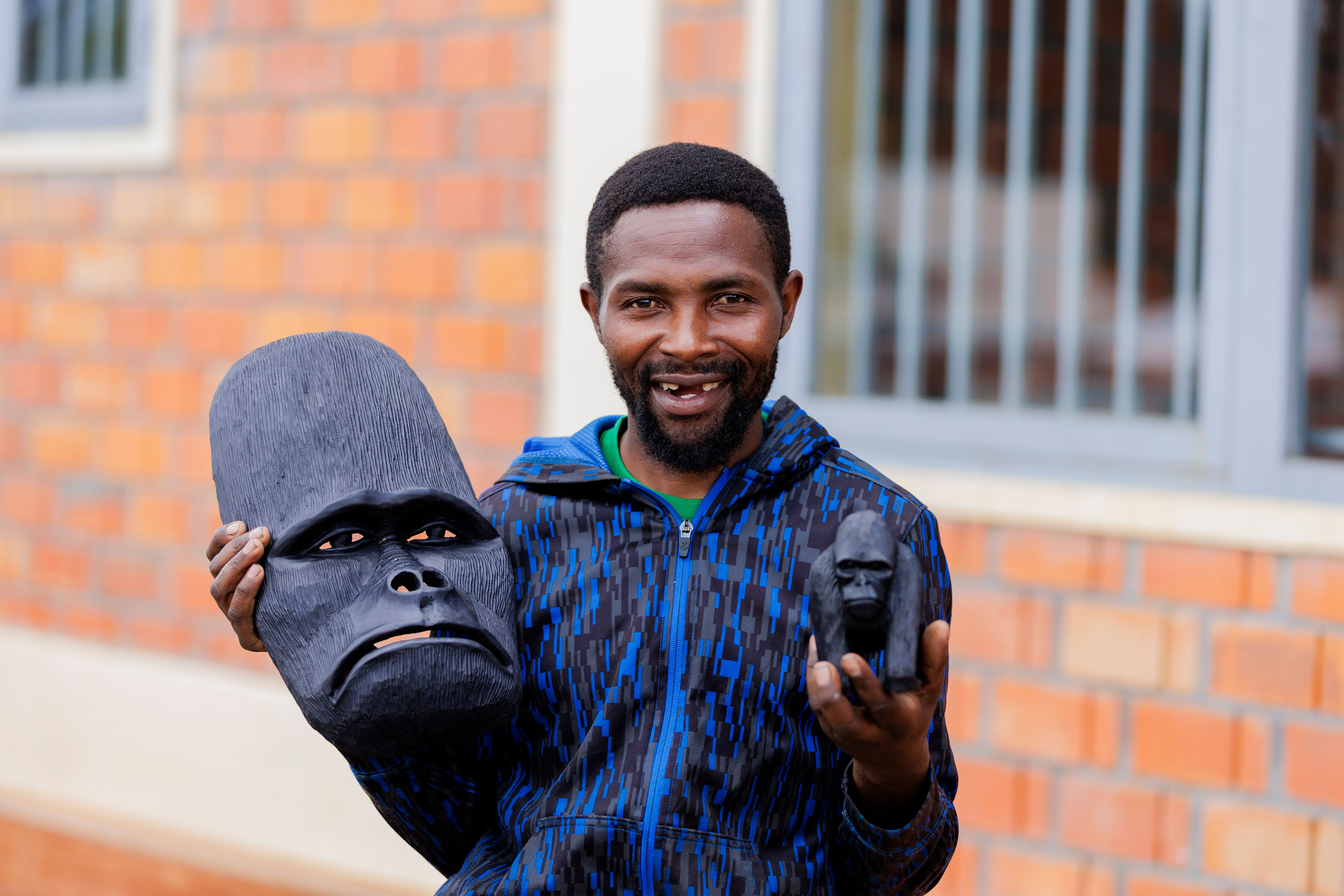
Ntirugiribambe Emmanuel at the VNP Business Incubation Awards, celebrating innovation and entrepreneurship.
For conservation to matter, it must make sense for families. In Kinigi, this is clear in the story of Ntirugiribambe Emmanuel, who joined a six-month business program at CBTC and started seeing his craft as a real business.
“During the training, I won RWF one million (US $685) in a competition I participated in 2024,” he recounts. “This funding has been a catalyst for further progress, as I used it to purchase equipment for my work. Additionally, it enables me to train my colleagues who are set to be relocated from the VNP.”
His story shows a simple truth: Conservation lasts longer when it brings real, measurable value to people’s lives.
Emmanuel describes what that has meant for his family. “I used to rent a one-room house, but through my engagement in ecosystem conservation activities, I was able to acquire a plot of land and a suitable home to live in,” he says. “Now, I also have a piece of land that allows me to earn about two million Rwandan Francs (US $1350) each season, providing enough to feed my family.”
These successes are more than personal achievements. They show a bigger change, where conservation is seen not as a limit, but as a way to support people’s lives.
A Community-Led Conservation Economy, Already in Motion
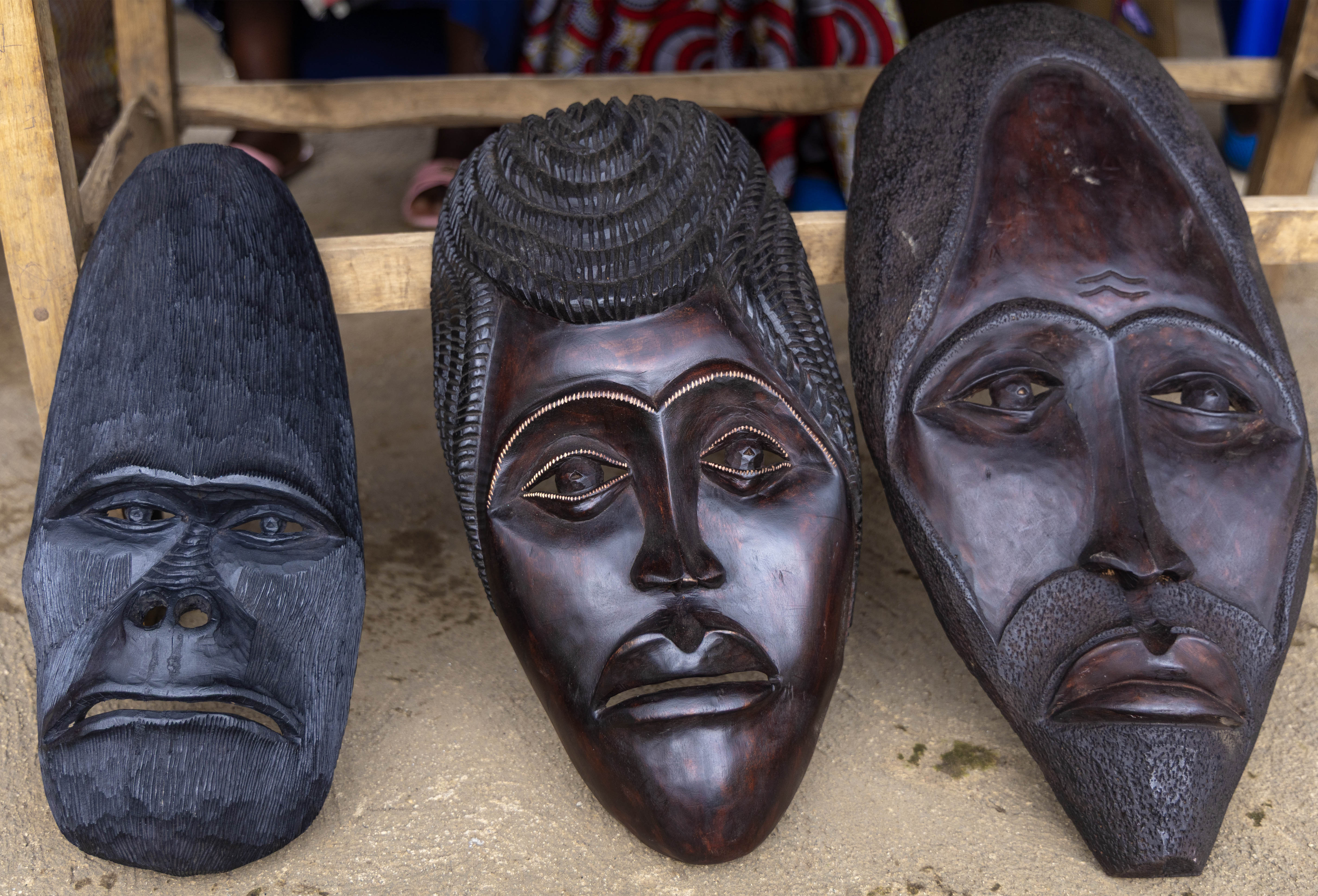
Masks crafted by local artisans.
Kinigi is a reminder that conservation and development need not be competing agendas. Through the CBTC, conservation education, cultural heritage, community enterprise, and enhanced tourism offerings are already working as a connected ecosystem.
You can see the change in how people talk about themselves. They have gone from bystanders to participants, from just getting by to building businesses, and from seeing conservation as a rule to seeing it as a shared responsibility.
What began as a mindset shift among residents like Esther is becoming a community-led tourism model that can support both livelihoods and biodiversity as Volcanoes National Park expands.